
Linkwarden as an Infrastructure Command Center
Taming dashboard sprawl and preserving immutable snapshots of ephemeral technical documentation with a self-hosted Linkwarden deployment.

Controlling Operational Sprawl
Every serious infrastructure environment accumulates dozens of web consoles, RFC references, hardware errata threads, IP reputation tools, and internal telemetry views. Browser bookmark bars rot quickly, and vendor documentation pages vanish right when an incident requires them.
Self-hosting Linkwarden turns scattered links into a searchable, archived engineering command center.
Why Archival Persistence Matters
Linkwarden captures static HTML, readable text, screenshots, and PDF snapshots at the exact moment a link is saved:
- Bit-Rot Immunity: Kernel mailing-list threads, forum posts on niche NIC firmware flags, and API changelogs remain readable offline even if the origin domain disappears.
- Taxonomy Discipline: Organizing collections into
01-Core-Dashboards,02-Network-Diagnostics,03-Mail-Reputation, and04-RFC-Referencesgives operators deterministic lookup paths under pressure. - API Automation: New runbooks and post-incident links can be pushed straight into Linkwarden via bearer-token API calls from internal scripts.
Hardening Notes
Keep Linkwarden behind your internal identity proxy or WireGuard mesh rather than exposing administrative login endpoints directly to the public internet, and snapshot both the PostgreSQL database and archive storage volume on a nightly retention schedule.
Field Log Discussion
Public @handle only · Private email hidden · Fenced code blocks supported
Join the architecture review under a self-chosen @handle. Your email address is never displayed publicly.
Related Field Logs
From Chaos to Control: Centralizing Infrastructure Management with Linkwarden
Deploy Linkwarden on Kubernetes with PostgreSQL, cert-manager, and Route53 automated TLS to centralize infrastructure consoles and runbooks.
Replacing Ghost with a Stateless Git and Markdown Architecture
Why we retired Node.js and MySQL CMS overhead in favor of version-controlled Markdown, Ghost URL parity, and AI-assisted editorial workflows.
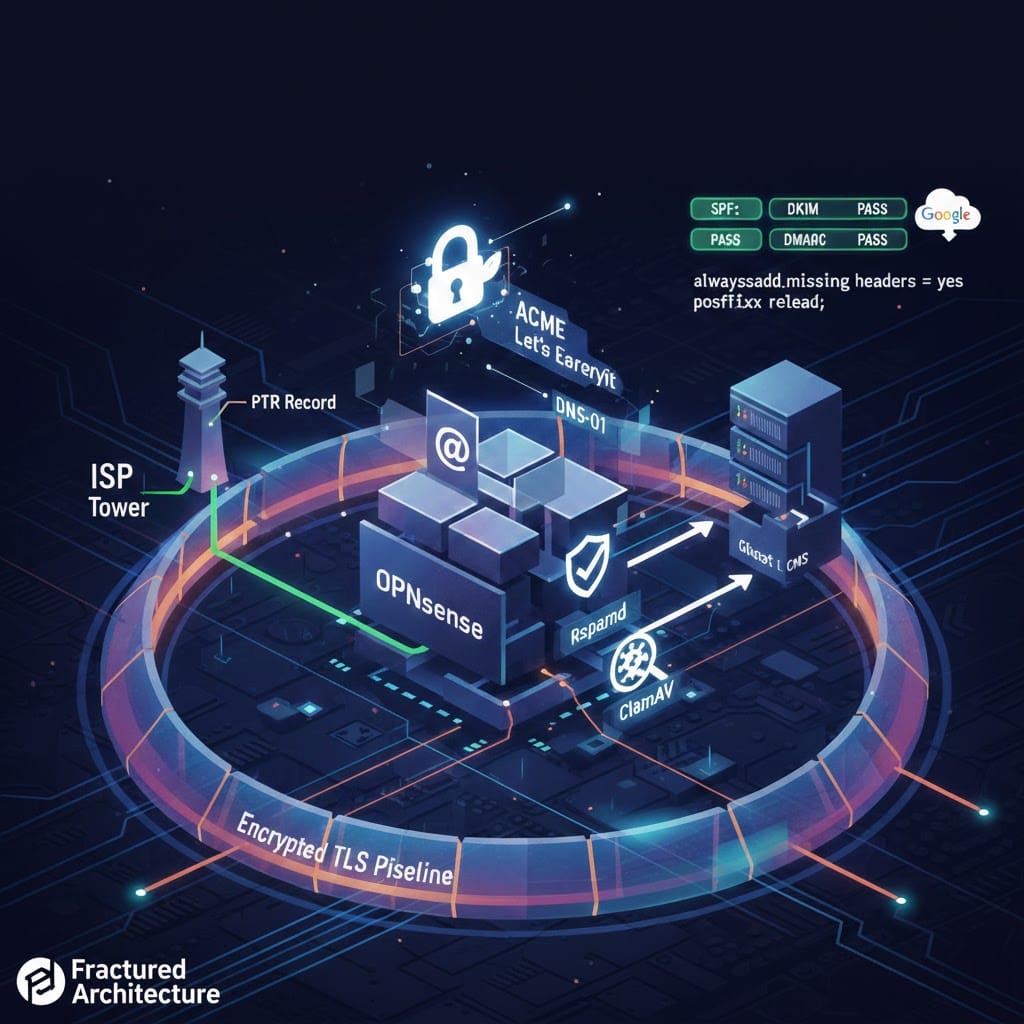
Mail Sovereignty Part II: Building a Professional, Self-Hosted Stack
Master self-hosted email sovereignty. Build a hardened OPNsense, Postfix, Rspamd, and Redis mail gateway with Route53 DNS-01 TLS and firmware-safe recovery.
Loading discussion notes...